‘The Need Had Been There for a While’: Inside Support Act and Live Nation’s Tour Mental Health Initiative


When it comes to life on the road, the glitz of arena lights and roaring crowds often overshadows the realities backstage. Long hours, relentless travel, and the pressures of production can take a toll – not just on artists, but on the crew that keeps the show running.
For years, mental health support in touring environments was minimal, often invisible. That’s starting to change, thanks to a new partnership between Support Act and Live Nation.
Clive Miller, CEO of Support Act, recalls how the collaboration began. “We actually came up with an idea quite some years ago about how we might be able to provide support, mental health support backstage,” he explains to The Music Network.
“But for what we’re doing now, Live Nation actually reached out to us. They’d been doing something similar in New Zealand with Merlin Mills from the Listening Commission – he’s a social worker but also works in production and tour management – and he had the opportunity to provide social work support in the same way that we’re doing now.”
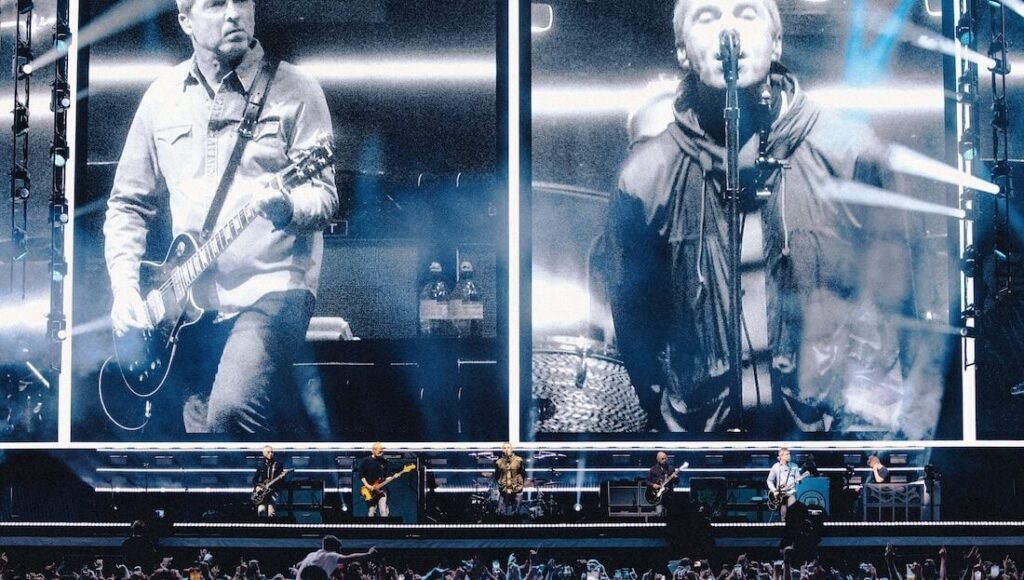
Since then, Support Act has embedded mental health professionals on some of the largest tours in Australia, including the recent Metallica and Oasis runs. While Support Act already has an established crisis relief initiative, this hopes to intervene by normalising conversations around mental wellbeing for the entire touring workforce.
“The need has been there for a while. There had been a growing recognition that the people who worked in music were experiencing a lot of mental ill health,” Miller notes. He recalls when he joined Support Act in 2018, adding that even then, conversations were being had at industry events. “People in the industry were saying this is a problem, but nobody knew how to really deal with it.”
On tours in particular, which this initiative focuses on, the issues are consistent: anxiety, depression, family or relationship stress, fatigue, long hours, and the pressure of constant travel.
So how does support work in practice? Miller explains that the program is intentionally informal, designed to meet people where they are. “Our team mostly spend their days walking around the site and just talking to people. We call it a ‘walk and talk’ – five or ten minutes to workshop an issue. Sometimes though it’s a more in-depth conversation, and it happens far less, but the opportunity is also there if somebody really wants a one-on-one counselling session.”
This approach has led to remarkable engagement. On the 22-day Metallica tour, Support Act reported between 250 and 300 interactions with crew and production staff. “A lot of them were of that walk-and-talk variety,” he says, “but being embedded for that long allows for deeper engagement too. It really speaks to the effectiveness – it’s not like they’re sitting in a room waiting for people to come and knock on the door, they’re out there and really present.”
Engagement isn’t just about numbers though, it’s about changing culture. Historically, touring crews often feared seeking help, worrying that admitting to mental health struggles could jeopardise future work. But Covid was a big turning point, according to Miller “Everybody recognised that we all struggle with mental health to some degree. Now, help-seeking behaviour is much more accepted, and people really welcome the service.”
Support tends to be most in demand during production-heavy days when crews are bumping in, setting up, or packing down a venue. And while the program currently focuses on crew, Miller emphasises that artists also face pressure and may engage with support where needed. “Some international artists do take part,” he says, “though they often have their own networks. But the program is equally available to them.”
Measuring success isn’t straightforward. While there’s no direct correlation between on-tour engagement and broader Support Act services, Miller highlights other indicators. “Success, for us, is measured in that feedback and people’s willingness to engage. The more people are engaging with us and subsequently engaging with our other services, we see that as a success.”
Looking ahead, Support Act hopes to expand this model to other promoters and festivals – as the original idea was some years ago.
“We’ve got a model now that works,” Miller says. “Our team enjoys being in the field, it’s really rewarding, I think, for them as well. It’s just such an invaluable way of getting the message out as well as providing a support service that is very much appreciated in these sorts of environments.”
Asked if some might see this as merely a “band-aid” solution in an industry known for burnout, Miller stresses the value of intervention. “It’s an additional support that helps mitigate the pressures of touring. Having someone present who listens, understands, and offers guidance can make a real difference. It’s not a replacement for structural change, but it’s a crucial part of creating a safer, more supportive touring environment.”
Link to the source article – https://themusicnetwork.com/clive-miller-interview-support-act-live-nation-mental-health-initiative/
-
 Leo Jaymz 39” Electric Guitar Les Paul Style – Mahogany Body and Neck – Curved top Exquisite Flame Maple Veneer – Newly upgraded Alnico V Pickups, Powerful and Pure$209,00 Buy product
 -
Hosa GMD-108 5-Pin DIN to 5-Pin DIN MIDI Coupler$5,95 Buy product
-
Tenor 4 String Banjo Fingerboard Notes & Chord Poster Wall Chart 11×17 | A New Song Music$7,99 Buy product
-
AODSK Beginner Digital Piano 88 Key Keyboard,Full-size Electric Piano for Beginners,with Sheet Music Stand,Pedal,Power Adapter,Supports Headset mode,USB-MIDI Connecting Black,-Comes with headphones$169,99 Buy product
-
Novation Launch Control XL MKII USB MIDI controller for Ableton Live with assignable controls$159,99 Buy product
-
Yamaha PSREW310 76-Key Touch Sensitive Portable Keyboard with PA130 Power AdapterBuy product





Responses